


Recruiting great salespeople is expensive and time-consuming. Losing them is worse. When a top performer leaves, you lose their production, their customer relationships, their institutional knowledge, and the investment you made to hire and develop them. Then you start the recruiting process all over again.
The numbers are stark. According to Everstage research, the average annual turnover rate for sales positions is approximately 35%, nearly three times the average turnover rate of 13% across all industries. Replacing a sales representative costs around $115,000 when accounting for recruitment, training, and lost sales opportunities during the transition period.
For software companies, where ramp times are long and product knowledge takes months to build, turnover is even more damaging. Every departure sets you back not just financially but strategically. And when top performers leave, they often take others with them.
Here’s how to retain the sales talent you’ve worked so hard to attract.
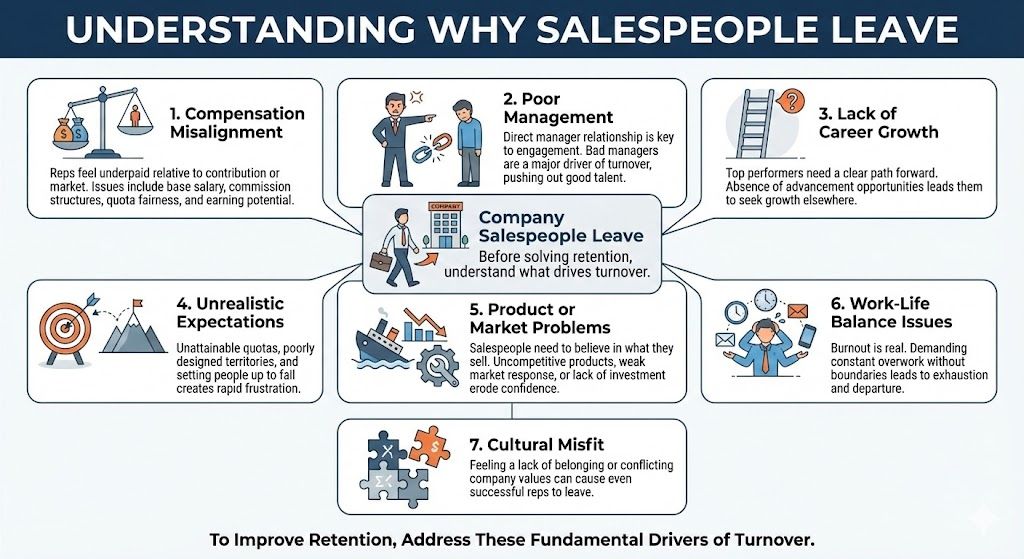
Understanding Why Salespeople Leave
Before solving retention, understand what drives turnover. Research consistently identifies several key factors:
Compensation misalignment. When reps feel underpaid relative to their contribution or market rates, they start looking. This isn’t just about base salary but also commission structures, quota fairness, and earning potential.
Poor management. The relationship between reps and their direct manager is the single biggest factor in engagement and retention. Bad managers drive out good salespeople faster than almost anything else.
Lack of career growth. Top performers want to see a path forward. If they can’t envision advancement opportunities, they’ll find them elsewhere.
Unrealistic expectations. When quotas are unattainable, territories are poorly designed, or the company sets people up to fail, frustration builds quickly.
Product or market problems. Salespeople want to sell something they believe in. If the product isn’t competitive, the market isn’t responding, or the company isn’t investing in success, reps lose confidence.
Work-life balance issues. Burnout is real in sales. Organizations that demand constant overwork without boundaries eventually burn out their best people.
Cultural misfit. Even successful reps leave if they don’t feel they belong or if company values conflict with their own.
Compensation That Retains
Compensation is table stakes for retention. You don’t have to pay the most in the market, but you have to be competitive enough that money isn’t a reason to leave.
Benchmark regularly. Compensation expectations shift with market conditions. Review your pay structures against current market data at least annually to ensure you’re competitive for your segment and geography.
Design fair quotas. Unrealistic quotas make OTE meaningless and demoralize your team. If less than half your reps are hitting quota, the problem is likely your targets, not your people. Aim for 60-70% of ramped reps achieving quota.
Reward top performers generously. Strong accelerators for overperformance keep your best people motivated. Capped commissions tell top performers you don’t want them to exceed expectations.
Consider retention bonuses. For key performers, structured retention bonuses that vest over time create incentive to stay. Annual bonuses tied to tenure can supplement regular commission structures.
Be transparent about pay. Companies that build trust through pay transparency have improved rep retention by 12-15% according to PayScale research. When reps understand how compensation decisions are made, they’re less likely to assume the grass is greener elsewhere.
For detailed guidance on structuring compensation, see our article on designing sales compensation plans.
Management That Engages
The manager relationship is make-or-break for retention. Great managers create environments where people want to stay. Poor managers create environments people flee.
Invest in manager development. Most sales managers were promoted because they were good sellers, not because they knew how to manage. Provide training and support to help them develop leadership skills.
Require regular one-on-ones. Managers should meet individually with each rep weekly, separate from pipeline reviews. These conversations should cover career development, obstacles, feedback, and personal connection, not just deals.
Coach rather than direct. Top performers don’t want micromanagement. They want coaching that helps them improve and autonomy to execute. Managers who only bark orders drive talent away.
Give meaningful feedback. Reps want to know how they’re doing and how they can improve. Regular, constructive feedback shows investment in their growth.
Recognize achievement. Public recognition for wins, both large and small, makes people feel valued. Managers who only notice problems create disengagement.
Address problems promptly. When reps raise concerns, take them seriously. Issues that fester become reasons to leave.
Career Development and Growth
Top performers are ambitious. They want to grow their skills, expand their responsibilities, and advance their careers. Organizations that provide growth opportunities retain talent longer.
Create clear advancement paths. Show reps how they can progress, whether that’s moving from SMB to mid-market to enterprise roles, transitioning into management, or taking on leadership responsibilities.
Provide skill development opportunities. Invest in training, coaching, and development programs. This might include sales methodology training, leadership development, or support for external learning.
Offer stretch assignments. Give high performers opportunities to take on special projects, mentor new hires, or contribute to cross-functional initiatives. Expanded responsibility without a title change can satisfy ambition.
Promote from within when possible. When leadership roles open, consider internal candidates first. External hires for roles that internal candidates wanted signal limited growth opportunity.
Have career conversations regularly. Managers should discuss career aspirations with their reps and help them work toward their goals. Understanding what people want helps you provide it before they look elsewhere.
Building Culture That Retains
Culture affects retention in ways that are hard to measure but impossible to ignore. People stay longer in environments where they feel they belong.
Create connection opportunities. Whether your team is co-located or remote, build opportunities for personal connection. Team events, social channels, and informal interactions strengthen relationships that make leaving harder.
Celebrate wins collectively. Shared success builds team identity. Celebrate milestones, recognize achievements, and create moments of collective pride.
Foster healthy competition. Competition can motivate, but toxic competition destroys culture. Encourage reps to push each other while maintaining collaboration and mutual support.
Maintain work-life boundaries. The always-on culture burns people out. Respect personal time, encourage vacation use, and model sustainable work habits from leadership.
Live your values. If you claim to value integrity, transparency, or customer focus, demonstrate those values consistently. Hypocrisy erodes trust and drives departures.
Setting Reps Up to Succeed
Nothing demotivates salespeople faster than being set up to fail. Retention starts with giving people what they need to succeed.
Provide adequate resources. Sales engineering support, marketing materials, lead generation, and technology tools all affect rep success. Underinvesting in these areas makes selling harder than it needs to be.
Design fair territories. Territory and account distribution significantly impact earning potential. Perceived unfairness in territory allocation breeds resentment and turnover.
Maintain product competitiveness. Reps lose confidence when the product falls behind competitors or when the company stops investing in improvement. Visible commitment to product excellence supports retention.
Fix systemic problems. When multiple reps struggle with the same issues, the problem is usually systemic. Address root causes rather than blaming individuals.
Listen to field feedback. Salespeople have direct insight into customer needs and competitive dynamics. Organizations that dismiss rep feedback frustrate their teams and miss valuable intelligence.
Early Warning Signs
Retention problems often become visible before people actually leave. Watch for warning signs:
- Performance decline in previously strong performers. Sudden drops in activity or results often signal disengagement.
- Reduced participation. Reps who disengage from team meetings, skip optional events, or become less communicative may be mentally checked out.
- Complaints about compensation or recognition. Vocal frustration about pay or treatment often precedes departures.
- Known external conversations. If you hear that someone is interviewing elsewhere, they’re already most of the way out the door.
- Life changes. Personal circumstances like relocations, family changes, or partners taking new jobs can trigger departures.
When you spot warning signs, act quickly. Have honest conversations about what would make someone want to stay. Sometimes you can address concerns before they become departures.
When Someone Threatens to Leave
Top performers sometimes receive outside offers. How you handle these moments matters.
Take the conversation seriously. Don’t dismiss or guilt-trip. Listen to understand what they’re looking for.
Understand the full picture. Is it just money, or are there deeper issues? Sometimes an outside offer is an excuse to leave for reasons they haven’t articulated.
Counter strategically. If you want to keep them and can address their concerns, make a compelling counteroffer. But understand that counteroffers often only delay departures if underlying issues aren’t resolved.
Know when to let go. Not every departure should be fought. Sometimes the best outcome for both parties is a graceful exit.
Conduct thorough exit interviews. When people do leave, learn from their departure. Honest exit conversations reveal issues that might be driving others away too.
Building a Retention-Focused Culture
Retention isn’t a program or initiative. It’s a mindset that permeates how you hire, manage, and develop your team.
Hire for fit from the start. Retention begins with recruiting. Hire people who align with your culture, can succeed in your environment, and want what you can offer. For help with this, consider working with a software recruiting firm that understands your needs.
Onboard thoroughly. Set new hires up for success with comprehensive onboarding. People who struggle early rarely recover and often leave. See our guide on building an effective onboarding program.
Measure and monitor. Track retention metrics, conduct engagement surveys, and monitor warning signs. You can’t improve what you don’t measure.
Act on feedback. Collecting feedback means nothing if you don’t act on it. Show your team that their input drives real change.
The Bottom Line
Retaining top sales talent requires intentional effort across compensation, management, career development, culture, and enablement. There’s no single lever that solves retention. It’s the cumulative effect of getting many things right.
The investment is worth it. Organizations with strong retention build institutional knowledge, maintain customer relationships, develop leadership pipelines, and avoid the massive costs of constant recruiting and ramping.
Your best salespeople have options. Every day, they’re choosing to stay with you. Make sure you’re giving them reasons to keep making that choice.
Leave a Reply