


The questions you ask in an interview reveal as much about you as your answers do. Asking thoughtful questions demonstrates preparation, signals genuine interest, and helps you evaluate whether the opportunity is right for you. According to CareerBuilder research, not asking questions is the most common interview mistake, with 38% of candidates failing to ask anything about the role or company. In sales interviews specifically, your questions show the hiring manager how you’ll approach discovery calls with prospects.
Why Your Questions Matter
Sales managers evaluate candidates partly on how they conduct the interview itself. They’re watching to see if you:
- Ask questions that show you’ve done your research
- Dig deeper when answers are vague
- Listen actively and follow up intelligently
- Treat the interview like a consultative sales conversation
The best sales candidates approach interviews the way they’d approach a prospect meeting. They come prepared with thoughtful questions, they listen more than they talk, and they use follow-up questions to uncover the full picture.
Your questions also help you avoid accepting the wrong role. Understanding quotas, territory, culture, and leadership style before you join prevents regret later. For more on evaluating opportunities, see our guide on evaluating sales job offers.
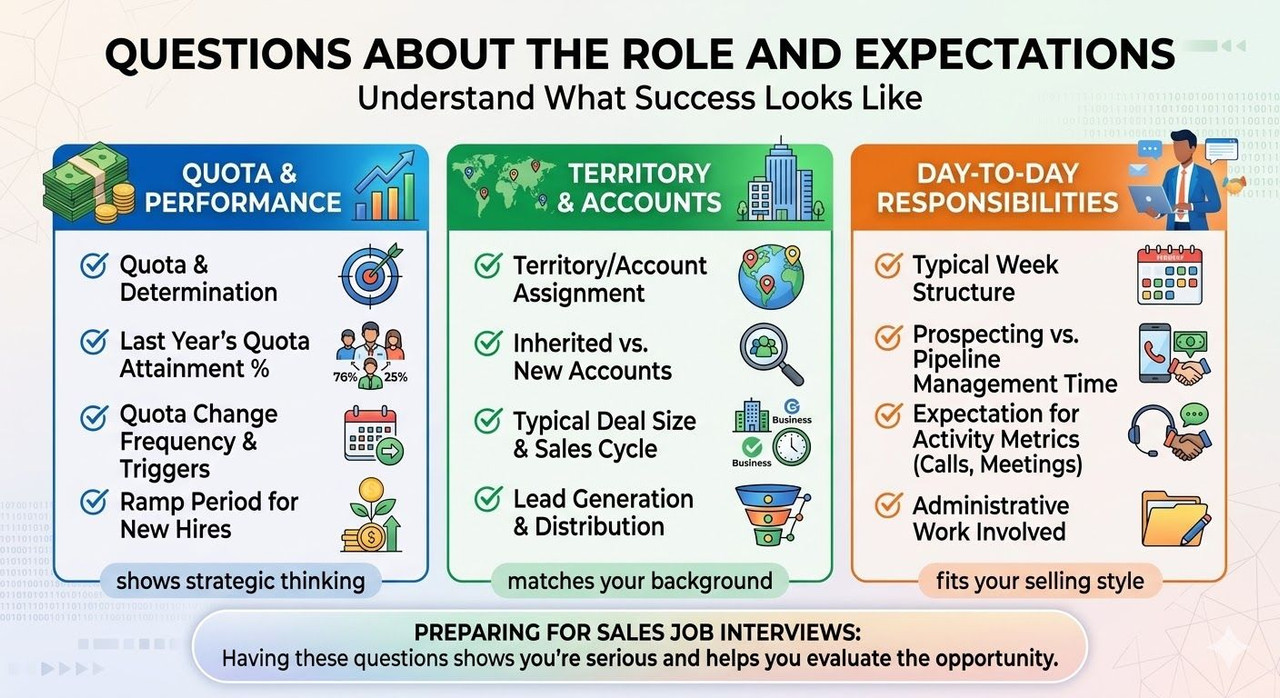
Questions About the Role and Expectations
Start with questions that help you understand what success looks like in this specific position.
Quota and performance:
- What’s the quota for this role, and how is it determined?
- What percentage of the team hit quota last year?
- How often do quotas change, and what triggers adjustments?
- What does the ramp period look like for new hires?
Territory and accounts:
- How is territory or account assignment determined?
- Will I inherit existing accounts or build from scratch?
- What’s the typical deal size and sales cycle length?
- How are leads generated and distributed?
Day-to-day responsibilities:
- What does a typical week look like in this role?
- How much time is spent prospecting versus managing existing pipeline?
- What’s the expectation for activity metrics like calls and meetings?
- How much administrative work is involved?
These questions help you understand whether the role matches your experience and selling style. If you’re preparing for sales job interviews, having these ready shows you’re serious about the opportunity.
Questions About the Sales Organization
Understanding the broader sales organization helps you assess whether you’ll have the support and resources to succeed.
Team structure:
- How is the sales team organized?
- How many reps report to my direct manager?
- What’s the relationship between SDRs and AEs?
- How does sales work with marketing and customer success?
Tools and process:
- What CRM and sales tools does the team use?
- How mature is the sales process here?
- What training and enablement resources are available?
- How are deals reviewed and forecasted?
Performance culture:
- How does the team celebrate wins?
- What happens when someone misses quota?
- How competitive versus collaborative is the culture?
- What separates top performers from average performers here?
These questions reveal whether the organization has the infrastructure to support your success or whether you’ll be figuring things out alone.
Questions About Leadership and Management Style
Your direct manager has enormous influence on your experience and success. Ask questions that help you understand their approach.
Management philosophy:
- How would you describe your management style?
- How often do you meet one-on-one with your reps?
- What does coaching look like on this team?
- How do you help reps who are struggling?
Feedback and development:
- How do you give feedback to your team?
- What development opportunities exist for high performers?
- How do you help reps prepare for promotion?
- What’s the typical career path from this role?
Their perspective:
- What do you enjoy most about managing this team?
- What’s the biggest challenge the team is facing right now?
- What would make someone unsuccessful in this role?
- What’s something you wish candidates asked more often?
If you’re an SDR hoping to eventually move up, understanding the promotion path matters. Our guide on getting promoted from SDR to account executive covers what to look for in growth opportunities.
Questions About the Product and Market
Your ability to sell depends partly on what you’re selling. Understand the product-market fit before you commit.
Product:
- What problem does the product solve for customers?
- What’s the competitive landscape like?
- How does the product win against competitors?
- What’s on the product roadmap that you’re excited about?
Market:
- Who is the ideal customer profile?
- What industries or segments are growing fastest?
- How do customers typically find you?
- What’s the biggest objection prospects raise?
Customer success:
- What’s the customer retention rate?
- How long does implementation typically take?
- What do customers say they love most about the product?
- What’s the biggest reason customers churn?
Strong product-market fit makes selling easier. Weak fit means you’ll spend more time convincing skeptical prospects and dealing with churn.
Questions About Compensation
Compensation questions require some finesse in timing, but you need this information to evaluate the opportunity properly.
Structure:
- What’s the base salary and OTE for this role?
- What’s the commission structure, and when does it pay out?
- Are there accelerators for exceeding quota?
- What does the ramp period compensation look like?
Reality check:
- What did the top performer earn last year?
- What did the average performer earn?
- How realistic is hitting OTE based on team performance?
- Are there clawbacks or other compensation adjustments I should know about?
Benefits:
- What benefits are included beyond base and commission?
- Is there equity or stock options?
- What’s the 401k match?
- How much PTO is standard?
For more on understanding and negotiating comp, see our guide on negotiating your sales compensation package.
Questions About Culture and Work Environment
Culture determines whether you’ll enjoy coming to work. Ask questions that reveal what daily life is really like.
Work style:
- Is this role remote, hybrid, or in-office?
- What flexibility exists around work hours?
- How does the team communicate day-to-day?
- What’s the travel expectation for this role?
Team dynamics:
- How would you describe the team culture?
- How do people collaborate here?
- What do people do outside of work?
- How long has the average team member been here?
Company trajectory:
- Where is the company in its growth stage?
- What’s the company’s biggest priority this year?
- How has the company changed over the past year?
- What concerns you most about the business right now?
Watch for red flags when interviewing at software companies. Evasive answers or defensiveness about culture questions can signal problems.
How to Ask Your Questions
The way you ask matters as much as what you ask.
Best practices:
- Prepare more questions than you’ll have time for
- Prioritize based on what matters most to you
- Take notes on the answers
- Ask follow-up questions when answers are vague
- Tailor questions to each interviewer’s role
What to avoid:
- Asking questions you could easily answer with research
- Focusing only on compensation in early rounds
- Asking the same questions you asked in previous rounds
- Interrogating rather than conversing
- Not asking anything at all
The best interviews feel like genuine two-way conversations. Your questions create that dynamic and help you gather the information you need to make a smart decision.
Questions to Save for Later Rounds
Some questions work better once you’ve built rapport or reached the offer stage:
- Detailed compensation negotiations
- Specific concerns about Glassdoor reviews
- Questions about work-life balance challenges
- Requests to speak with current team members
- Timeline and next steps in the process
Early rounds should focus on understanding the role and demonstrating your interest. Save the tougher questions for when you have leverage and context.
Leave a Reply