


Working with sales recruiters can accelerate your job search by giving you access to opportunities you’d never find on your own. According to the American Staffing Association, six in ten people who work with staffing firms do so specifically to help them land a job. But to get the most out of these relationships, you need to understand how recruiters operate and what they’re actually looking for.
Here’s how to work with sales recruiters effectively.
How Sales Recruiters Work
Before you engage with recruiters, understand the basics of their business model.
They work for the company, not you. Recruiters get paid by employers to find candidates. Their fee is typically 15% to 25% of your first-year compensation. This means their primary loyalty is to the hiring company, though good recruiters care about candidate experience too.
They’re motivated to place you. When you get hired, they get paid. This alignment of incentives means recruiters genuinely want to help you succeed in interviews and land offers.
They specialize. The best recruiters focus on specific industries and roles. A recruiter who specializes in SaaS sales will have deeper relationships and better insights than a generalist.
They have access you don’t. Many companies use recruiters for roles they never post publicly. Working with recruiters opens doors to this hidden job market.
Types of Sales Recruiters
Not all recruiters operate the same way.
Contingency Recruiters
Most sales recruiters work on contingency, meaning they only get paid if you’re hired. They typically work multiple roles simultaneously and move quickly. You might work with several contingency recruiters at once.
Retained Recruiters
Retained recruiters are paid upfront to fill specific roles, usually senior or executive positions. They work more closely with fewer candidates and provide a more high-touch experience.
Internal Recruiters
Internal recruiters work directly for a single company. They’re not third-party agencies but employees of the hiring organization. They can give you inside information about the company but only represent that one employer.
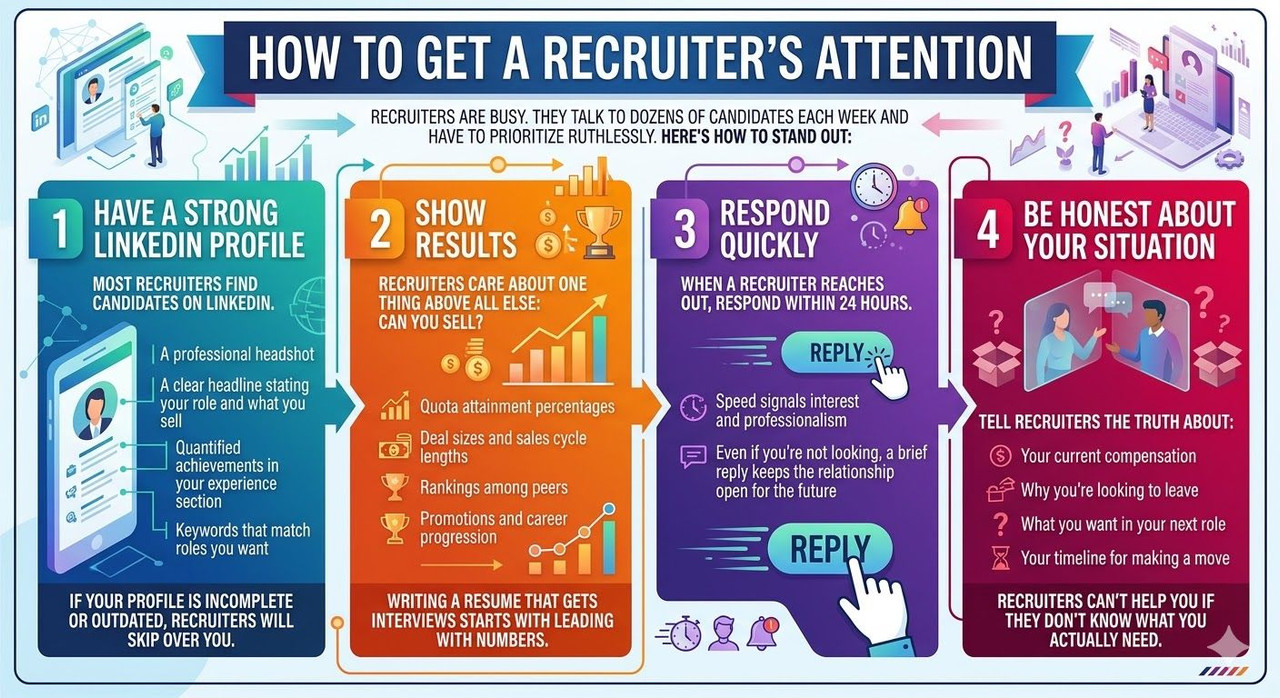
How to Get a Recruiter’s Attention
Recruiters are busy. They talk to dozens of candidates each week and have to prioritize ruthlessly. Here’s how to stand out:
Have a Strong LinkedIn Profile
Most recruiters find candidates on LinkedIn. Your profile should include:
- A professional headshot
- A clear headline stating your role and what you sell
- Quantified achievements in your experience section
- Keywords that match roles you want
If your profile is incomplete or outdated, recruiters will skip over you.
Show Results
Recruiters care about one thing above all else: can you sell? Make it easy for them to see your track record:
- Quota attainment percentages
- Deal sizes and sales cycle lengths
- Rankings among peers
- Promotions and career progression
Writing a resume that gets interviews starts with leading with numbers.
Respond Quickly
When a recruiter reaches out, respond within 24 hours. Speed signals interest and professionalism. Even if you’re not looking, a brief reply keeps the relationship open for the future.
Be Honest About Your Situation
Tell recruiters the truth about:
- Your current compensation
- Why you’re looking to leave
- What you want in your next role
- Your timeline for making a move
Recruiters can’t help you if they don’t know what you actually need.
What Recruiters Look For
Understanding recruiter priorities helps you position yourself effectively.
Relevant Experience
Recruiters match candidates to job requirements. If a company wants someone who has sold to enterprise healthcare buyers, that’s what the recruiter needs to find. The closer your experience matches the role, the more likely you’ll be submitted.
Stability
Job-hopping raises red flags. Recruiters prefer candidates with at least 18 to 24 months at each company. If you have short stints, be prepared to explain them.
Current Performance
Your recent results matter most. If you’re crushing quota now, you’re a hot commodity. If you’re struggling, recruiters will be more cautious.
Compensation Alignment
Recruiters need candidates whose expectations match the role’s budget. If you’re making $200K and the role pays $150K, you’re probably not a fit, regardless of your skills.
Interview Skills
Recruiters want candidates who will perform well in interviews. If you seem nervous, unprepared, or hard to work with, they may hesitate to put you forward. Preparing for sales job interviews helps you make a strong impression.
How to Build Recruiter Relationships
The best time to build recruiter relationships is before you need them.
Connect Before You’re Desperate
Reach out to recruiters when you’re happily employed. This gives you leverage and shows you’re a desirable candidate, not someone who got fired and needs a job immediately.
Be a Source of Referrals
If you know strong candidates, refer them. Recruiters remember people who help them, and they’ll prioritize you when good roles come up.
Stay in Touch
Check in periodically, even when you’re not looking. Share updates about promotions or new skills. This keeps you top of mind.
Don’t Waste Their Time
If a role isn’t right for you, say so quickly and explain why. Recruiters appreciate candidates who don’t string them along.
Getting the Most from Recruiter Calls
When a recruiter contacts you about a role, make the conversation productive.
Ask the Right Questions
Get the information you need to evaluate the opportunity:
- What company is this for? (Some recruiters are cagey, but push for details.)
- Why is the role open?
- What’s the compensation range?
- What does the sales team structure look like?
- What’s the interview process?
Be Specific About What You Want
Vague answers don’t help. Tell recruiters exactly what you’re looking for:
- Target compensation
- Preferred deal size and sales cycle
- Industry or vertical preferences
- Location requirements
- Remote vs. in-office preferences
The more specific you are, the better they can match you to appropriate roles.
Discuss Your Concerns Openly
If something about the role gives you pause, say so. Recruiters can often address concerns or provide context that changes your perspective. They can also stop wasting your time on roles that aren’t actually a fit.
Common Mistakes Candidates Make
Avoid these errors when working with recruiters.
Ghosting
If you decide you’re not interested or you accept another offer, tell your recruiter. Disappearing damages the relationship and your reputation. The sales world is smaller than you think.
Lying About Compensation
Recruiters will verify your salary history or ask for documentation. Inflating your current comp to negotiate a higher offer backfires when the truth comes out.
Being Difficult to Reach
If you’re unresponsive during the process, recruiters assume you’re not serious. Make yourself available for calls and interviews.
Badmouthing Previous Employers
Even if your last company was terrible, keep it professional. Recruiters notice candidates who complain excessively and wonder if you’ll say the same things about their clients.
Applying Directly After a Recruiter Submits You
If a recruiter submits you to a company, don’t then apply directly or go through a different recruiter. This creates confusion and burns bridges.
When Recruiters Can Help Most
Recruiters are especially valuable in certain situations:
- Confidential searches: When you can’t let your current employer know you’re looking
- Relocating: When you need connections in a new market
- Moving up-market: When you want access to enterprise sales roles you can’t find on job boards
- Negotiation: When you want help negotiating your compensation package
- Market intelligence: When you want to understand what’s out there before committing to a search
When to Be Cautious
Not all recruiter interactions are positive. Watch for warning signs:
- Pressure to take roles that don’t fit your criteria
- Unwillingness to share basic information about opportunities
- Submitting your resume without permission
- Making promises they can’t keep
- Poor communication throughout the process
A good recruiter makes your job search easier. A bad one wastes your time and can even damage your reputation with employers.
Building Your Recruiter Network
Identify 3 to 5 recruiters who specialize in your space and build genuine relationships:
- Research firms that focus on software sales recruiting
- Ask colleagues who they’ve had good experiences with
- Look for recruiters who are active on LinkedIn with relevant content
- Evaluate them in early conversations just as they evaluate you
The right recruiter relationships can serve you throughout your career, not just for your next job.
Final Thoughts
Sales recruiters can be powerful allies in your job search. They open doors to hidden opportunities, provide market intelligence, and advocate for you with hiring managers. But like any relationship, you get out what you put in.
Be responsive, be honest, and treat recruiters as partners. When you find good ones, maintain those relationships even when you’re not actively looking. The best time to know a recruiter is before you need one.
Leave a Reply