


Managing rejection in a sales job search requires the same resilience you use to handle rejection from prospects. The numbers are sobering: research shows that job seekers now submit anywhere from 32 to over 200 applications before receiving an offer, with only 0.1% to 2% of cold applications resulting in a job. Understanding that rejection is simply part of the process helps you stay focused and keep moving forward.
Here’s how to handle rejection productively and turn setbacks into better outcomes.
Why Rejection Feels Different in Job Searches
Sales professionals deal with rejection constantly. You get hung up on, ignored, and told “no” every day. So why does job search rejection hit differently?
It’s personal. When a prospect rejects your product, they’re not rejecting you. When a company passes on your candidacy, it feels like they’re saying you’re not good enough.
The stakes are higher. A lost deal stings, but you have other opportunities in your pipeline. A job rejection can feel like it threatens your entire livelihood.
You have less control. In sales, you can always make more calls. In job searching, you’re dependent on companies responding, which creates frustrating uncertainty.
Feedback is rare. Most companies never explain why they passed. This lack of closure makes it hard to know if you did something wrong or just weren’t the right fit.
Recognizing these dynamics helps you separate the emotional weight from the practical reality.
Reframing How You Think About Rejection
Your mindset shapes your experience. Here’s how to think about rejection more productively:
It’s Usually Not About You
Most rejections happen for reasons completely outside your control:
- The company decided to promote internally
- Budget got cut and the role was eliminated
- A referred candidate had an inside track
- The hiring manager had a very specific background in mind
- Timing was simply off
When you don’t get selected, it usually means you weren’t the right fit for that specific situation, not that you’re a bad candidate overall.
Every “No” Brings Data
Each rejection teaches you something if you pay attention. Maybe your resume isn’t highlighting the right experience. Maybe you’re targeting the wrong types of companies. Maybe your interview answers need work.
Treat rejections as feedback, even when companies don’t give you explicit feedback.
The Right Fit Matters
Getting rejected from a company that wasn’t right for you is actually a good outcome. Taking the wrong job leads to misery, short tenure, and a resume gap you’ll have to explain later.
Trust that rejection sometimes protects you from bad situations you couldn’t see during the interview process.
Practical Strategies for Handling Rejection
Beyond mindset, here are concrete actions that help:
Don’t Take Long Breaks
When rejection hits, the temptation is to step back and lick your wounds. Resist it. Momentum matters in job searching. A few days off can turn into a few weeks, which makes getting back in motion even harder.
Allow yourself a brief disappointment period, maybe an afternoon or a day, then get back to applications and outreach.
Keep Your Pipeline Full
Just like in sales, a full pipeline reduces the emotional impact of any single rejection. If you’re waiting on one company to get back to you, you’re setting yourself up for a crash if they say no.
Aim to have multiple applications and conversations in progress at all times. When one door closes, others are still open.
Track Your Activity
Maintain a simple tracker of applications, responses, and outcomes. This serves two purposes:
- It shows you that you’re making progress even when results aren’t coming
- It helps you identify patterns in what’s working and what isn’t
If you’ve sent 50 applications and gotten zero responses, that’s a signal to revisit your resume and targeting. If you’re getting interviews but no offers, focus on improving your interview preparation.
Seek Feedback When Possible
Most companies won’t give detailed feedback, but some will if you ask. After a rejection, send a brief, gracious note:
“Thank you for letting me know. I enjoyed learning about the role and your team. If you’re open to sharing any feedback on my candidacy, I’d genuinely appreciate it as I continue my search.”
You won’t always get a response, but occasionally you’ll receive insights that help you improve.
Talk to People
Job searching in isolation amplifies rejection’s emotional toll. Stay connected with:
- Friends and former colleagues who’ve been through job searches
- Other sales professionals who understand the process
- Mentors who can offer perspective
- Recruiters who can give you market feedback
Sharing your experience normalizes rejection and provides support when motivation dips.
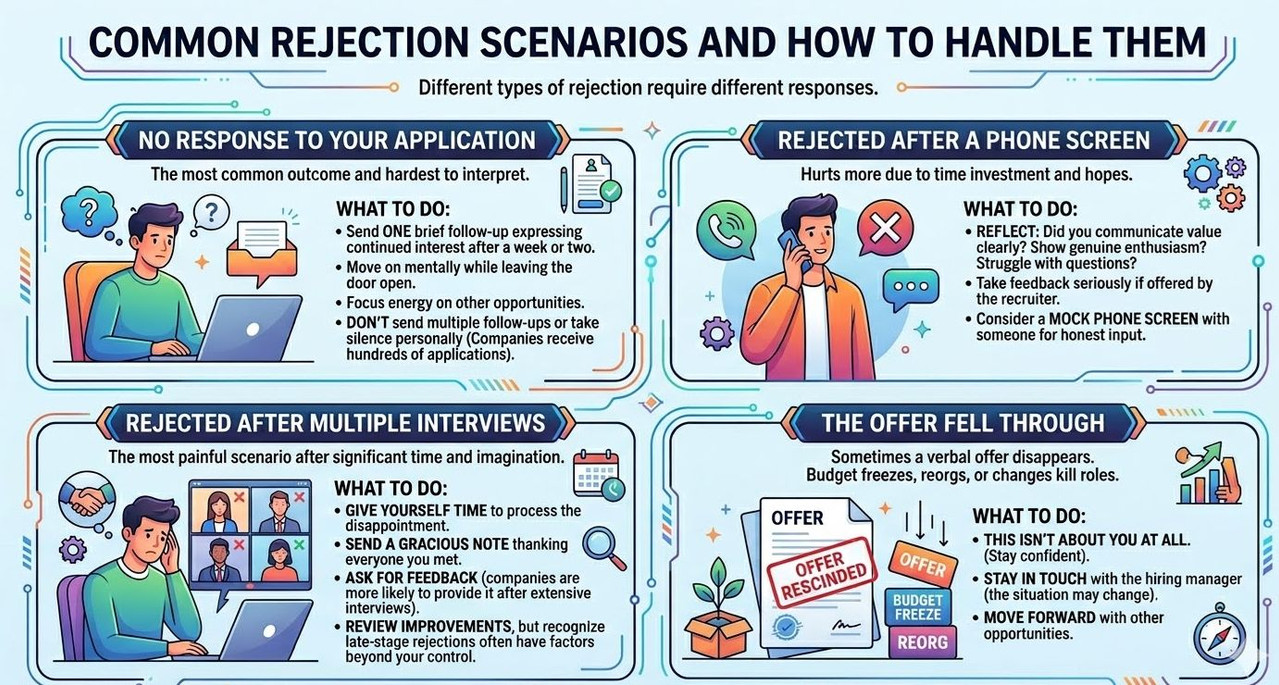
Common Rejection Scenarios and How to Handle Them
Different types of rejection require different responses.
No Response to Your Application
This is the most common outcome and the hardest to interpret. After a week or two of silence, you can:
- Send one brief follow-up expressing continued interest
- Move on mentally while leaving the door open
- Focus energy on other opportunities
Don’t send multiple follow-ups or take the silence personally. Companies receive hundreds of applications and simply can’t respond to everyone.
Rejected After a Phone Screen
This hurts more because you invested time and got your hopes up. Use it as a chance to reflect:
- Did you communicate your value clearly?
- Did you show genuine enthusiasm for the role?
- Were there questions you struggled to answer?
If the recruiter offered feedback, take it seriously. If not, consider doing a mock phone screen with someone who can give you honest input.
Rejected After Multiple Interviews
This is the most painful scenario. You’ve invested significant time, met multiple people, and started imagining yourself in the role.
Give yourself time to process the disappointment. Then:
- Send a gracious note thanking everyone you met
- Ask for feedback, as companies are more likely to provide it after extensive interviews
- Review what you could improve, but also recognize that late-stage rejections often come down to factors beyond your control
The Offer Fell Through
Sometimes you get a verbal offer that disappears. Budget freezes, reorgs, or leadership changes can kill roles at the last moment. This isn’t about you at all. Stay in touch with the hiring manager, as the situation may change, and move forward with other opportunities.
Improving Your Approach Based on Results
Use rejection data to refine your job search strategy.
If You’re Not Getting Responses
Focus on your outbound materials:
- Is your resume highlighting quantified achievements?
- Are you applying to roles where your experience genuinely fits?
- Is your LinkedIn profile optimized?
- Are you relying solely on job boards, or also networking and reaching out directly?
Consider having someone review your resume and application approach.
If You’re Getting Screens But Not Interviews
Something in your initial conversations isn’t connecting:
- Are you clearly articulating your sales track record?
- Do you sound enthusiastic about the specific opportunity?
- Are you asking good questions that show genuine interest?
- Is your salary expectation aligned with the role?
Practice your phone screen pitch and get feedback from someone objective.
If You’re Interviewing But Not Getting Offers
You’re close, but something in the final evaluation isn’t landing:
- Are you preparing thoroughly for each interview?
- Do you have strong stories that demonstrate your achievements?
- Are you asking thoughtful questions that show business acumen?
- Are there red flags you’re giving off that you’re not aware of?
Request feedback from rejecting companies and consider mock interviews with someone who hires salespeople.
Maintaining Mental Health During the Search
Extended job searches take a toll. Protect yourself:
- Set boundaries. Designate specific hours for job searching and step away outside those times.
- Celebrate small wins. Getting a response, landing a phone screen, or making a new connection all count as progress.
- Exercise and sleep. Physical health directly affects mental resilience.
- Limit comparison. Seeing others announce new jobs on LinkedIn while you’re struggling is demoralizing. Take social media breaks if needed.
- Remember your worth. A job search is a matching process, not a judgment of your value as a person or professional.
When to Adjust Your Expectations
Sometimes rejection patterns indicate that you need to recalibrate:
- If you’re consistently rejected for roles that require more experience, consider targeting mid-level positions rather than stretches
- If compensation expectations keep causing rejections, research market rates more thoroughly
- If you’re rejected by all companies in one sector, consider whether you’re missing domain expertise that’s essential
- If multiple interviewers cite the same concern, take it seriously and address it
Adjusting expectations isn’t giving up. It’s being strategic about where to focus your energy.
Final Thoughts
Rejection is an unavoidable part of job searching, just like it’s an unavoidable part of sales. The professionals who land great roles aren’t the ones who avoid rejection. They’re the ones who handle it well, learn from it, and keep going.
Every rejection gets you closer to the right opportunity. Stay active, stay positive, and trust the process.
Leave a Reply